Last Saturday, the first one warm enough to stand outside without a coat, Ryan had the pellet grill's grates leaning against a patio post and the shop vac hose down in the fire pot, while Jack held the flashlight with the seriousness of a surgical nurse. The grill turns five this month. It got its spring cleaning, and I got to wondering whether it was worth the money.
We bought it in March 2021 for $699, a mid-size pellet grill to sit beside Ryan's 2009 Weber kettle. Ryan works day shift at the plant, 6:00 to 2:30, and the reason he wanted one was simple. He wanted to smoke a brisket without getting up every two hours to feed a fire. Five years later, here's our honest review.
What it does well, and what it doesn't
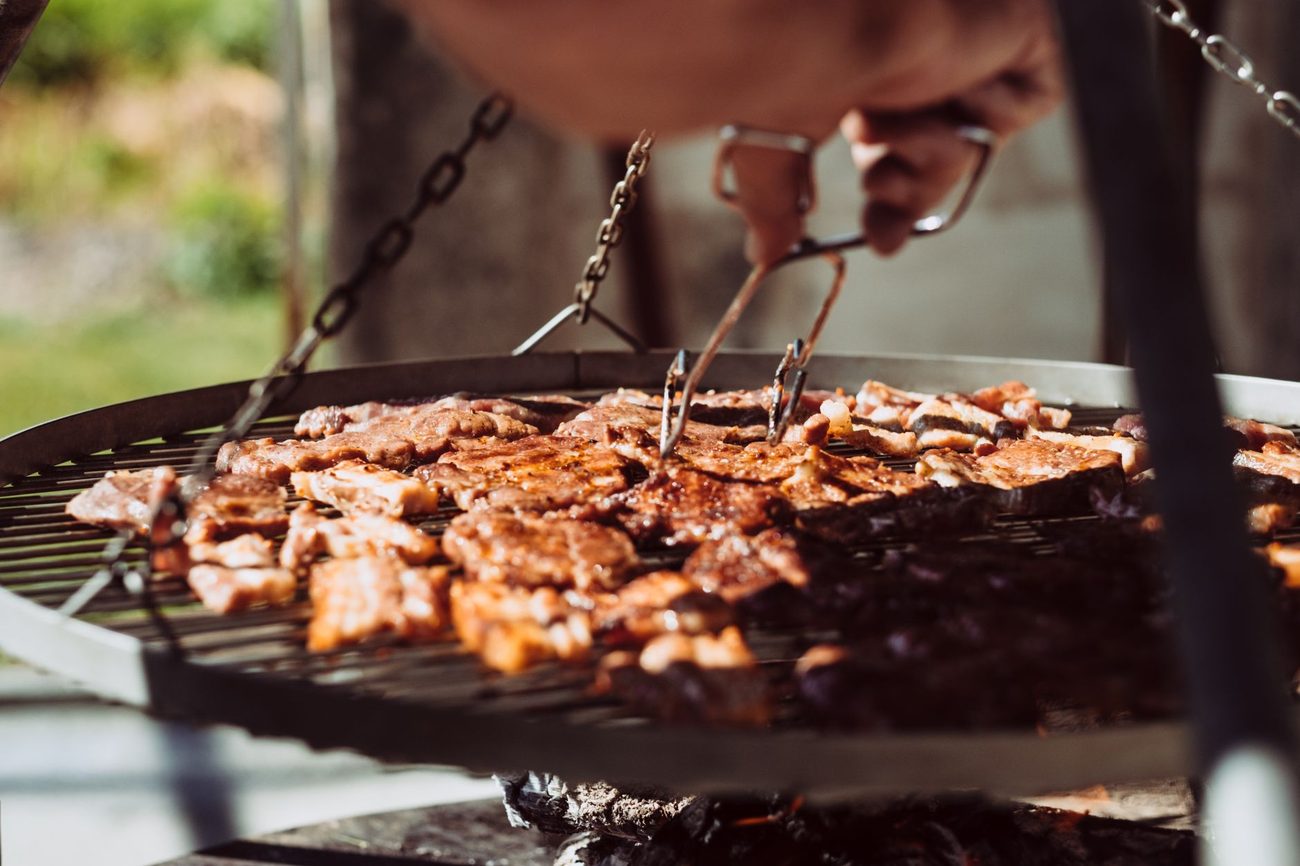
It does long, low cooks better than anything we've owned. Set it at 225°F and it holds within about 10 degrees all night, which is how Ryan smoked last April's 14-pound brisket in 13 hours and two pork butts for twenty people on the Fourth. It handled forty chicken thighs for my end-of-school cookout, and it smoked our 16-pound Thanksgiving turkey while my oven took care of everything else. It's simple enough that I run it myself for chicken on a Tuesday.
It doesn't sear. Ours tops out around 450°F, and it cooks with moving hot air instead of radiant heat, so burgers come out gray. The kettle still makes every burger at our house. The smoke flavor is lighter than charcoal and wood, too. Pellets burn hot and clean, and a clean fire makes thin, nearly invisible smoke, which tastes pleasant but never as deep as a kettle with a chunk of hickory on the coals.
It needs an outlet, so it isn't going to any tailgates. It hates rain, because wet pellets swell into something like oatmeal in the auger. And it can quit on you. On the Fourth of July, the pellets bridged over the auger at 4:40 a.m. and the fire went out until Ryan's alarm caught it.
Pellets, parts and the math
At 225°F it burns about 2 pounds of pellets an hour, and a 20-pound bag runs about $20, so figure a dollar an hour. A brisket takes around $26 worth. A weeknight pan of chicken thighs is about $5. Cold and wind push it higher, and in January Ryan figures it's closer to 3 pounds an hour. He estimates we go through 15 bags a year.
We have replaced exactly two parts. The igniter quit in 2023, a $28 part that took Ryan twenty minutes and a screwdriver. The meat probe that came with the grill frayed at the cable and cost about $15 to replace, though Ryan mostly uses his wireless probe set anyway. Otherwise it's been grease bucket liners and a lot of shop vac. Ash builds up in the fire pot and keeps the igniter from lighting, so it gets vacuumed every five or six cooks.
Here's the math. $699 for the grill plus $43 in parts is $742 over five years, about $148 a year. Ryan thinks he cooks on it around 40 times a year, so the grill itself has cost under $4 a cook. The pellets have cost more than the grill did, roughly $300 a year, and I'd rather say that plainly than pretend they don't count.
If it died tomorrow
Was it worth $699? For us, yes. Not because the food is better than what Ryan could do on the kettle with enough patience, but because he sleeps. When the brisket alarm goes off at 3 a.m., it's for the meat, not the fire.
If it died tomorrow, Ryan already knows his answer. He'd buy another mid-size pellet grill at about the same price, skip the Wi-Fi models because his wireless probes already talk to his phone, and look for one with a hopper clean-out door, so switching pellet flavors doesn't mean scooping them out by hand. The kettle stays no matter what. I'd add one thing to his list: a cover that fits better than ours, which has faded to the color of weak tea.