On the Fourth of July, Mom spread three weeks of saved newspapers across two folding tables in our backyard, and Ryan carried a pot big enough to bathe Waylon over to the propane burner. Then twelve people stood around and watched it not boil for 45 minutes. I'll come back to that.
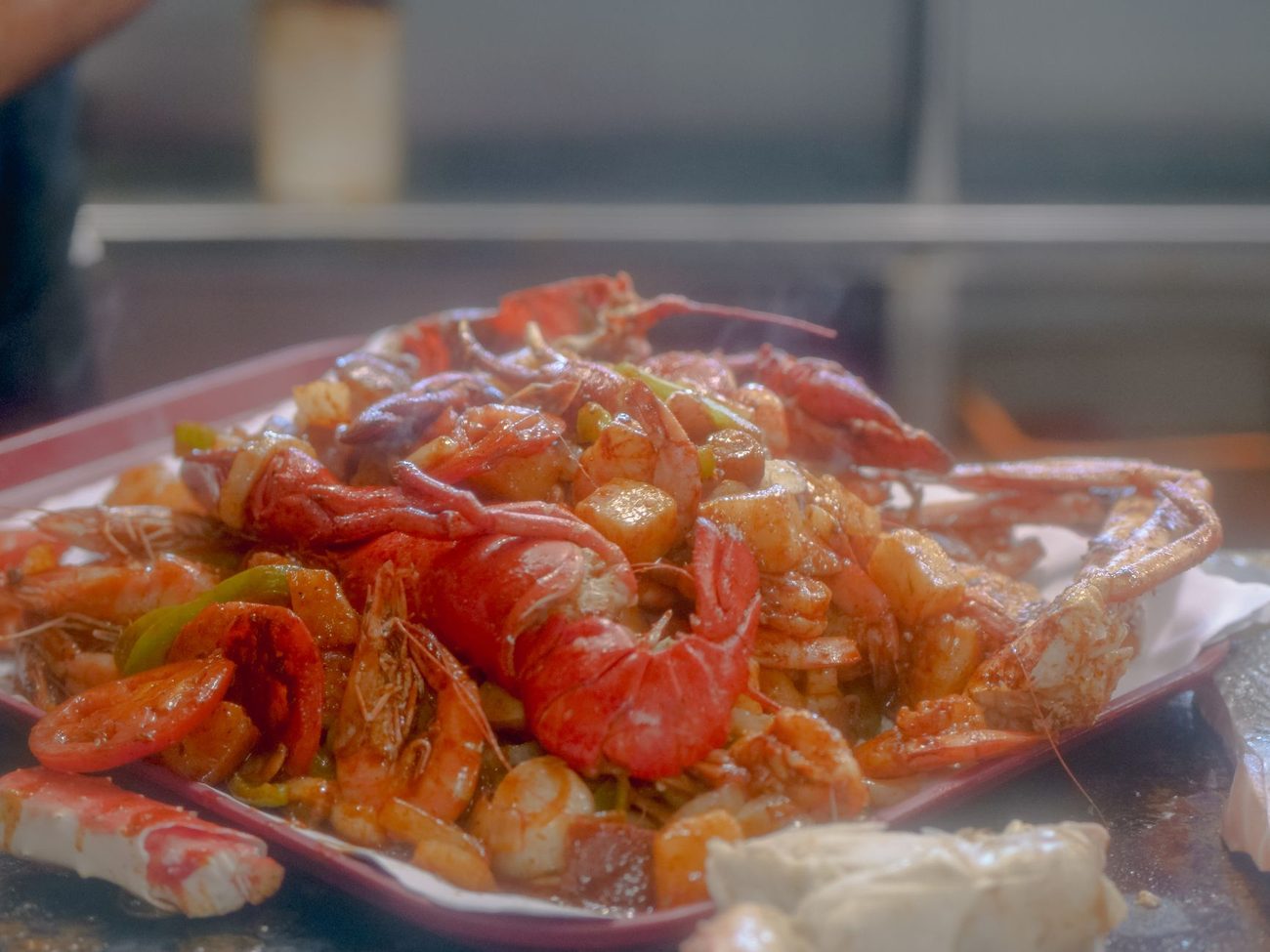
The idea came home with us from Charleston last month, where we spent a week on James Island and got a Lowcountry boil lesson that changed how Ryan thinks about feeding a crowd. A Lowcountry boil, which some people there still call Frogmore stew, is shrimp, smoked sausage, corn and potatoes cooked together in one seasoned pot, drained and poured down the middle of a table. It's the opposite of barbecue. There's no overnight cook, no wrapping and no 3 a.m. alarm, and once the water boils, dinner is about 25 minutes away.
Twelve people meant the four of us, Mom and Dad, Deb and Marcus from next door and a family of four from Jack's baseball team. A boil for twelve needs at least a 60-quart pot, so the week after Charleston we bought a 60-quart aluminum pot with a strainer basket at a hardware store in Columbia for $64.
Ingredients
- 6 pounds shell-on shrimp, 21 to 25 per pound, kept on ice until the last minute
- 3 pounds smoked sausage, cut in 2-inch pieces
- 12 ears sweet corn, shucked and broken in half
- 5 pounds small red potatoes
- 2 sweet onions, quartered
- 3 lemons, halved, plus more for the table
- 1 head garlic, halved crosswise
- 1/2 cup Old Bay seasoning, plus a shaker for the table
- 1/3 cup kosher salt
- About 5 gallons of water
- Melted butter and cocktail sauce for dipping
How we boil it
- Set the burner on the driveway, well away from the house, the covered patio and anything else that can burn. Kids stay ten feet back.
- Fill the pot with about 5 gallons of water. Squeeze in the lemons and drop them in, then add the onions, garlic, Old Bay and salt. Cover and bring to a hard boil, which can take the better part of an hour.
- Potatoes go in first. When the water returns to a boil, cook them 12 minutes.
- Add the sausage and corn. When it boils again, cook 8 minutes more, until a knife slides easily into a potato.
- Add the shrimp, turn the burner off and stir. Let them sit about 3 minutes, until they're pink, curled and opaque all the way through.
- Lift the basket, let it drain for a minute and pour everything down the middle of the papered table. Butter, cocktail sauce and lemon wedges go at both ends.
Turning the burner off before the shrimp go in was the most useful thing we learned in Charleston. Five gallons of water just off the boil holds more than enough heat to cook shrimp through in a few minutes, and shrimp that keep boiling turn tough fast. Ryan says it like a rule now: "Shrimp last, fire off."
What went wrong was the water. Ryan lit the burner at 5:15 for a 6:00 dinner, figuring a big burner would boil anything in twenty minutes. Five gallons took 45, with a breeze pulling heat off the side of the pot the whole time. Mom's deviled eggs carried us. We ate at 6:40, and next time the burner goes on an hour ahead with the lid on until it boils.
Once it was poured out, nobody needed instructions. Jack peeled shrimp faster than I've ever seen him do anything voluntary and gave the whole thing a nine, docking a point for having to peel them himself. Nora, who doesn't like spicy food, decided Old Bay mostly tastes like the beach and asked for more lemon. Dad ate his corn the way he eats his own, in straight rows like a typewriter.
It was 91°F when we poured it out, so the rule was one hour on the table, not two. When the hour was up, the leftovers went into shallow containers and into the fridge, and the shells went into a tied bag in the outside trash can so the garage wouldn't smell like the coast by Monday.
The shrimp came from the meat market in Columbia at $9.99 a pound, frozen and thawed, which is what almost all shrimp in Middle Tennessee is if we're being honest. Six pounds was $59.94, and the whole boil for twelve, with sausage, potatoes, corn, lemons and propane, came to about $99, a little over $8 a person.