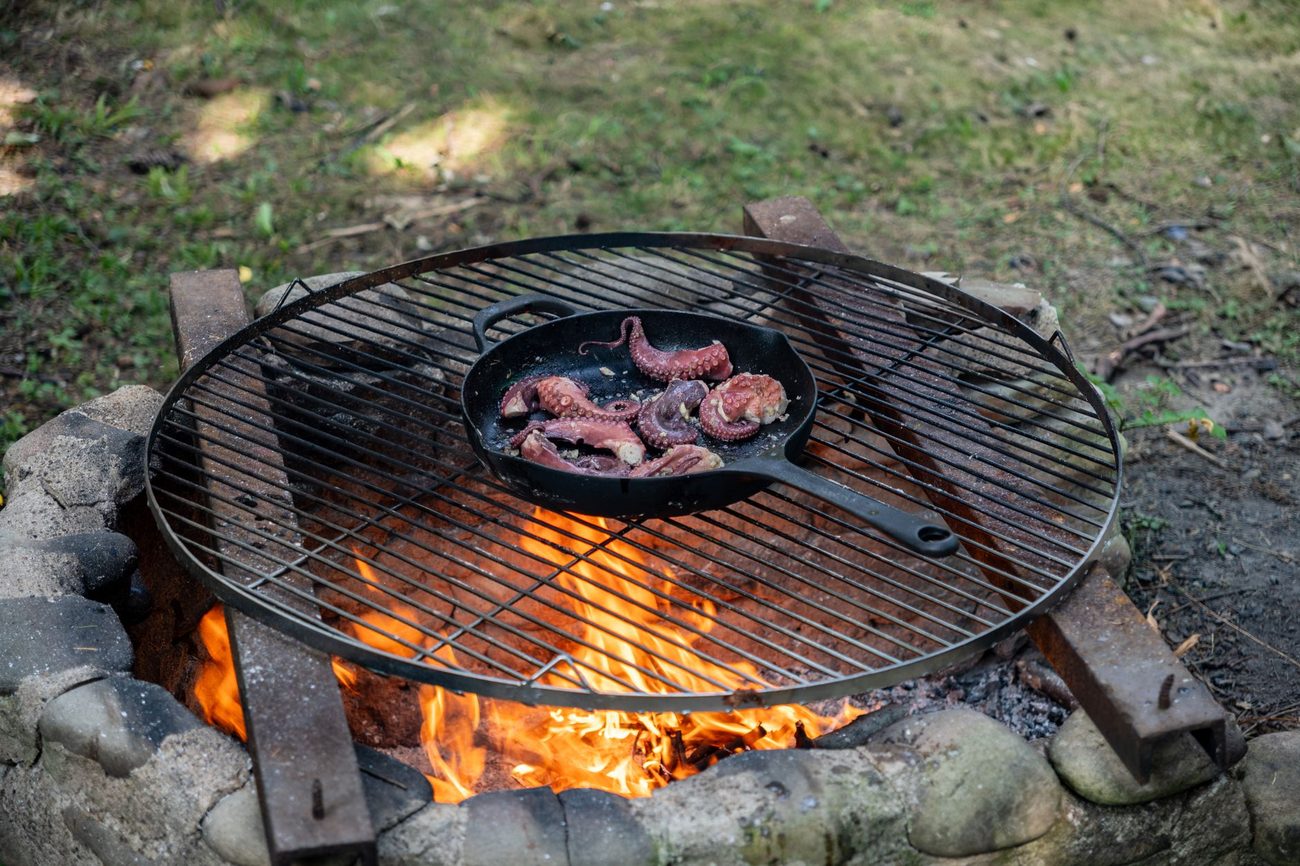
Last Sunday morning I found a rust spot the size of a quarter in the middle of Granny June's skillet. Ryan had washed it after supper Saturday night, which was kind, and left it in the dish rack overnight, which was not. By breakfast there was an orange bloom right where seventy years of cornbread have worn the cooking surface smooth as a creek rock.
I didn't panic. That's growth, because in 2011 I would have.
The skillet I ruined
In 2011 I was a couple of years into teaching high school in Marshall County, living in a rental with a tiny kitchen, and I owned exactly one cast iron skillet. It cost $15 at a hardware store, and I bought it because Granny said every kitchen needed one. One night after fried potatoes, tired and in a hurry, I put it in the dishwasher.
It came out dull gray and blotchy. By the next morning it was orange from rim to rim. I decided it was ruined and threw it in the trash, and I didn't tell Granny for a year. When I finally did, she said I could have scrubbed it and started over. She was right, and she was not a woman who let you forget it.
Here's the why I wish I'd known. Seasoning isn't a coat of grease. It's oil heated past its smoke point until it bonds to the iron and hardens into a thin, slick layer, closer to a varnish than to anything in your fryer. A dishwasher's long hot soak and harsh detergent strip that layer off, and bare iron starts rusting within hours. But that rust is almost always on the surface. Scrub it away and the iron underneath is fine. My $15 skillet needed about $2 of steel wool and oil.
How I fixed the rust spot
- Scrubbed just the rusty spot with fine steel wool and a little water until I saw clean gray iron.
- Washed the whole skillet with hot water and a drop of dish soap, then dried it on a burner over medium-low for about two minutes.
- Rubbed in about half a teaspoon of vegetable oil with a paper towel, then wiped it again with a clean towel until it looked almost dry. Too much oil turns sticky instead of hard.
- Baked it upside down at 450°F for an hour, with a sheet of foil on the rack below to catch drips, and let it cool in the oven.
One round was enough this time. The spot is a shade lighter than the rest, and after a few more pans of cornbread nobody will be able to find it.
How I clean and cook in cast iron now
We have three pieces: Granny's 10-inch, a 12-inch Lodge I bought in 2013 for about $25 to replace the one I threw away, and a Lodge Dutch oven. They all get the same routine.
- Clean it while it's warm. Hot water, a plastic pan scraper and a chainmail scrubber that cost me $12 and will outlive me. A drop of dish soap is fine. Modern dish soap isn't the harsh lye soap people scrubbed with when Granny was a girl.
- Dry it on the burner, every time. A towel leaves enough water behind to start rust by morning, as we've established.
- Oil it thin. Half a teaspoon, wiped in and wiped back out.
- Preheat slowly. Five minutes on medium-low before turning it up. Iron heats unevenly, and a cold skillet on high heat gets a scorching spot right over the flame.
- Go easy on long-simmered tomatoes. A quick pan sauce is fine. An hour of tomato sauce eats into the seasoning and tastes faintly of pennies. That goes in a stainless pot.
- Never soak it, never put it in the dishwasher. I wrote that on an index card and taped it inside the cabinet door, mostly for Ryan, who has promised.
As for jobs: Granny's skillet makes cornbread and anything fried in a shallow layer of oil, and nothing else if I can help it. The Lodge handles pork chops, potatoes and the bigger frying jobs. The Dutch oven does beans, chili and anything that needs to sit low for a long time.
What would I do differently? Back in 2011, I'd have spent twenty minutes on the same four steps instead of carrying a skillet to the curb. And if you ever see a rusty cast iron skillet at a yard sale for a few dollars, buy it. Rust is the easy part.