Jack gave Monday's cornbread an eight. On Thursday he gave the other one an eight too, then sat back in his chair like he had personally settled a sixteen-year family argument.
He hadn't. The argument is between my side and Ryan's side, and it goes like this. Granny June's skillet cornbread has no sugar in it, none, and her card in the red box says so in capital letters, underlined: NO SUGAR. Ryan's family in Columbia makes theirs sweet, with flour and sugar, soft enough to eat with a fork. I've eaten his mother's cornbread at holidays since 2010 and been polite about it, and he's eaten Granny's and been polite back. Somewhere around Christmas, polite wore off.
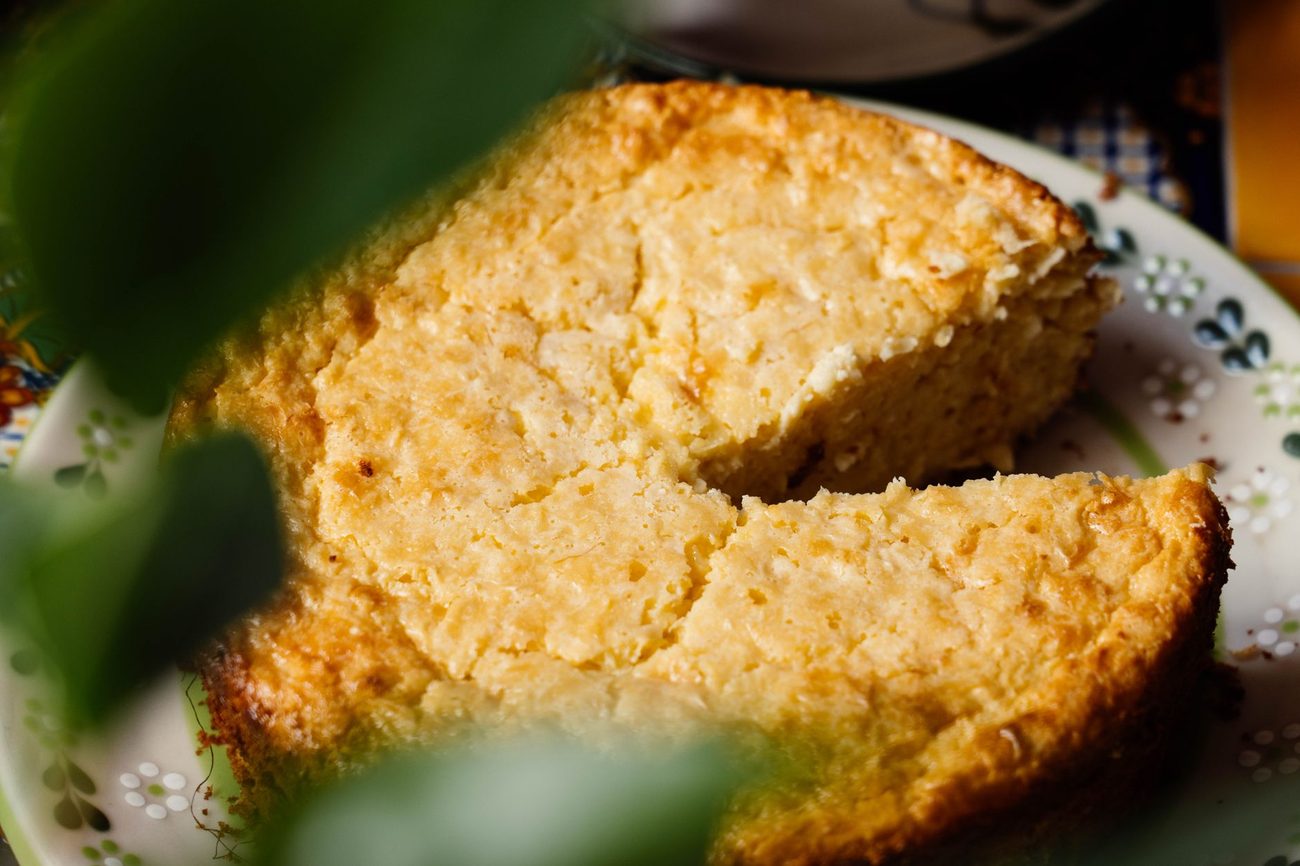
So the week after Nora's birthday I baked both. Same 10-inch skillet, Granny's, the one from the 1950s. Same buttermilk, same oven. Monday was Granny's with a pot of chili. Thursday was his mother's recipe, exactly as she wrote it out for me years ago, with a pot of pintos. The kids voted out of ten. Ryan recused himself, which was the right call.
Why the skillet matters more than the sugar
Here's what I'd tell my students. When you pour batter into a skillet that's been heating in a 450°F oven with fat in it, the batter that touches the iron sets almost instantly and fries. That's where the crisp brown crust comes from, the part people fight over. Sugar changes two things: it makes the crumb softer and more cake-like because it holds on to moisture, and it browns at a lower temperature than everything else in the batter.
That second part is what went wrong. I tried Ryan's family's version on Tuesday at Granny's 450°F, and the bottom went from brown to burned before the center set. Waylon got the scorched half and considered it the best night of his week. On Thursday I dropped the oven to 400°F and got a beautiful pan. Sweet cornbread wants a slightly cooler oven. Write that down if you're on that side.
Ingredients
- 3 tablespoons bacon drippings, lard or vegetable oil
- 2 cups plain white cornmeal, not a mix
- 1 teaspoon baking powder
- 1/2 teaspoon baking soda
- 1 teaspoon fine salt
- 1 large egg
- 1 3/4 cups whole buttermilk
How I make it
- Put the drippings in a 10-inch cast iron skillet, set it in the oven and heat the oven to 450°F. Leave the skillet in for 10 minutes after the oven comes up to temperature. The fat should shimmer.
- Whisk the cornmeal, baking powder, baking soda and salt in a bowl.
- Whisk the egg into the buttermilk, then stir it into the dry ingredients just until combined. It should pour like thick pancake batter; add a splash more buttermilk if it doesn't.
- Take the skillet out with a thick mitt and carefully pour about a tablespoon of the hot fat into the batter. Stir it in, then pour the batter into the skillet. It should sizzle hard. If it doesn't, the skillet wasn't hot enough.
- Bake 20 to 22 minutes, until the top is golden, the edges are deep brown and pulling away and a toothpick in the center comes out clean.
- Turn it out onto a rack right away so the bottom stays crisp, then cut it in wedges.
For Ryan's family's version, use 1 cup yellow cornmeal and 1 cup all-purpose flour, add 1/3 cup sugar and 1/4 cup melted butter, swap 1 cup of the buttermilk for whole milk, and bake at 400°F for 22 to 25 minutes. Either skillet costs about $1.50 to make. Leftovers keep two days wrapped on the counter, and stale cornbread crumbled and dried in a low oven is the start of a good dressing.
The final count: Jack, eight and eight. Nora gave Granny's a seven and the sweet one a nine, because she is twelve now and bakes cakes and thinks most things should taste a little like cake. So the sweet side won by two points, and I'll be hearing about it at every family dinner until summer.
I'm not changing Granny's card. But I did copy his mother's recipe onto a fresh card, with "400°F, not 450" added in my handwriting, and filed it in the box behind Granny's and mine. That's about as diplomatic as I get.